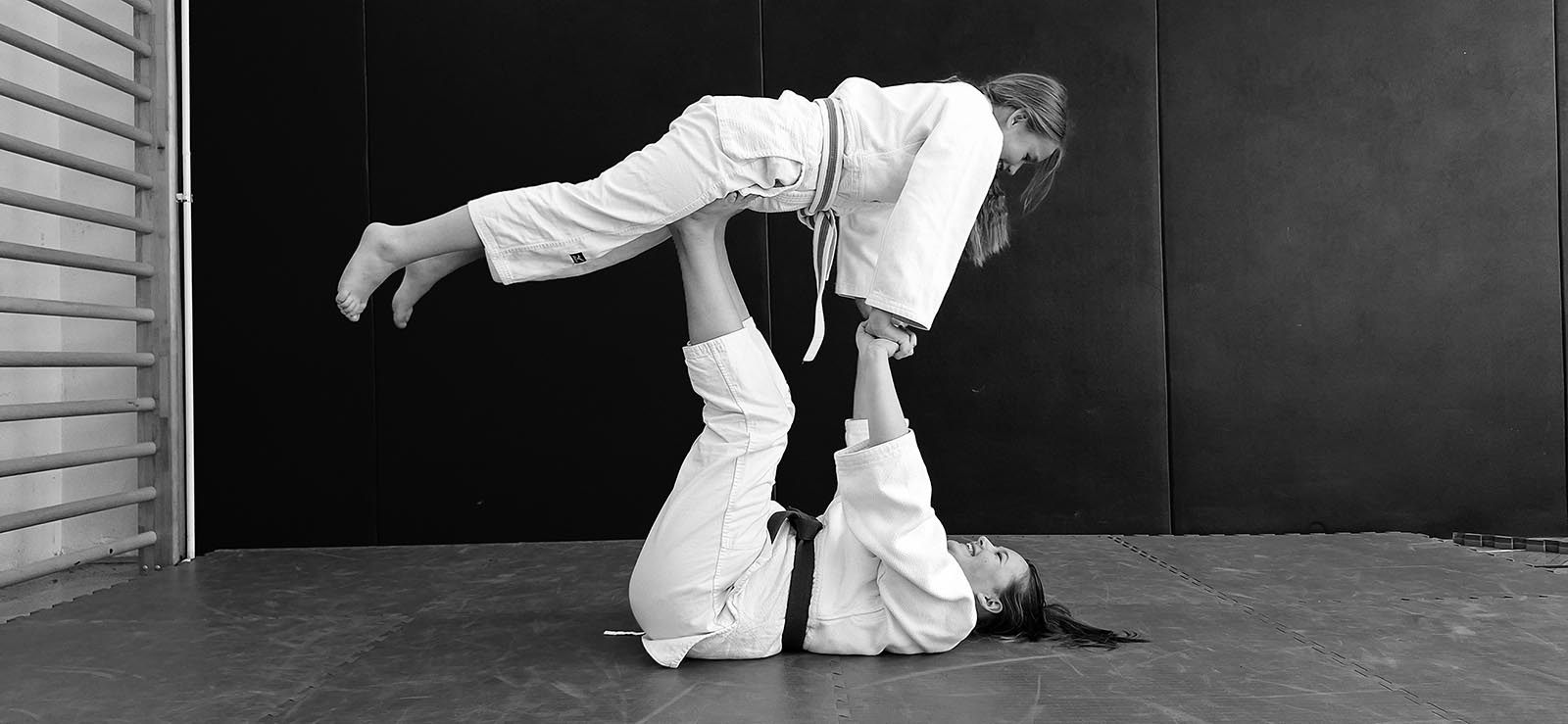
The martial art of Ju-Jitsuoriginated in the second half of the 16th century in Japan. It encompasses a wide range of combat techniques, such as strikes, grips, throws, blocks, locks, and more. It serves as the foundation for several modern self-defense disciplines, including judo, karate, and aikido. In the past, Ju-Jitsu was most commonly practiced by the police and military due to its versatility and universality, while its use in civilian environments was less frequent or even prohibited.


However, in the second half of the 20th century, it began to spread into civilian spheres as well. Clubs and associations were established, and national and international federations were formed.


The literal translation of the word Ju-Jitsu is "gentle path". The ultimate goal of all martial arts is to seek balance between the body and mind. Therefore, the fundamental purpose of martial arts is to harmonize the individual's physical and mental activities through training, reflection, and way of life.


Ju-Jitsu is practiced in a specialized martial arts uniform called a kimono, on special mats known as tatami. Levels of proficiency are indicated by belts, which can be student belts (KYU) or master belts (DAN). Obtaining a belt level can be the result of passing a specific examination (belt testing) or achieving excellent results in competitions, coaching, or judging.


In Ju-Jitsu, as a sport discipline, there are several different disciplines known, including:


  • Demonstrations of Ju-Jitsu techniques
  • Fights
  • Duo system
  • Brazilian Ju-Jitsu


Fighting System


The Ju-Jitsu fighting system encompasses a diverse array of technical abilities that are also found in various other martial arts disciplines. A participant can secure victory by accumulating multiple points throughout the three-minute bout, or by executing a series of flawless techniques from different sets, which the judges deem as "ippon". Competitions are held across different divisions for men and women, as well as varying age and weight categories.

Duo System


In the duo system competitors face off in pairs. It is a demonstration of effectiveness, technical precision, and speed in executing defenses against pre-determined attacks. Competitions are held in men's, women's, and mixed pairs in various age categories.

BJJ


This is a ground fighting sport that can be performed in a kimono or in so-called NO-GI attire. Competitors are rewarded with points for actively executing techniques, transitioning between different techniques, and even for successfully escaping from disadvantaged positions. Submissions, joint locks, and chokes are allowed in the fight. The fight concludes if a competitor successfully executes a choking or joint lock technique.

Demonstrations of Ju-Jitsu techniques


This competition is exclusively for youth selections, aged up to 16 years. Each participant is classified into the appropriate category based on their age and belt level, which has specific techniques prescribed. The competitor must perform certain Ju-Jitsu techniques and defenses in front of the judging committee and strive for the highest scores.


Avtorske pravice © 2025 Mladinsko društvo Aries. Vse pravice pridržane. Petka produkcija